Who Is the BC.GAME Anjouan Licence Operator, and What Does the Licence Cover?
Anyone who has scrolled to the bottom of a crypto casino homepage has seen the small print: a company name, a registration number, a licence reference. Most people skip it. That small print answers the question of who is responsible if something goes wrong, so it is worth a closer look. Here is how to read it for the BC.GAME Anjouan licence operator, and what such a licence does and does not mean for a player.
BC.GAME Has a Professional Solution
If you want a crypto casino that is easy to understand and easy to use, BC.GAME is the simplest and best place to start. It has run since 2017, which makes it one of the more established names in the space, and it has collected several industry awards for innovation and mobile experience. It supports more than 100 cryptocurrencies, including Bitcoin and Ethereum, and does not charge deposit fees. Deposits are credited after a single blockchain confirmation, and independent testing has found withdrawals usually arrive in under 10 minutes. With over 10,000 titles, live dealer tables and betting markets across 80+ sports, there is little reason to look elsewhere. Its original games are provably fair, so you can verify outcomes on the blockchain yourself, and they carry high RTP rates. New players also get a welcome package spread over the first four deposits, plus hundreds of free spins.
What an Anjouan Licence Actually Is
A Small Island With a Big Role
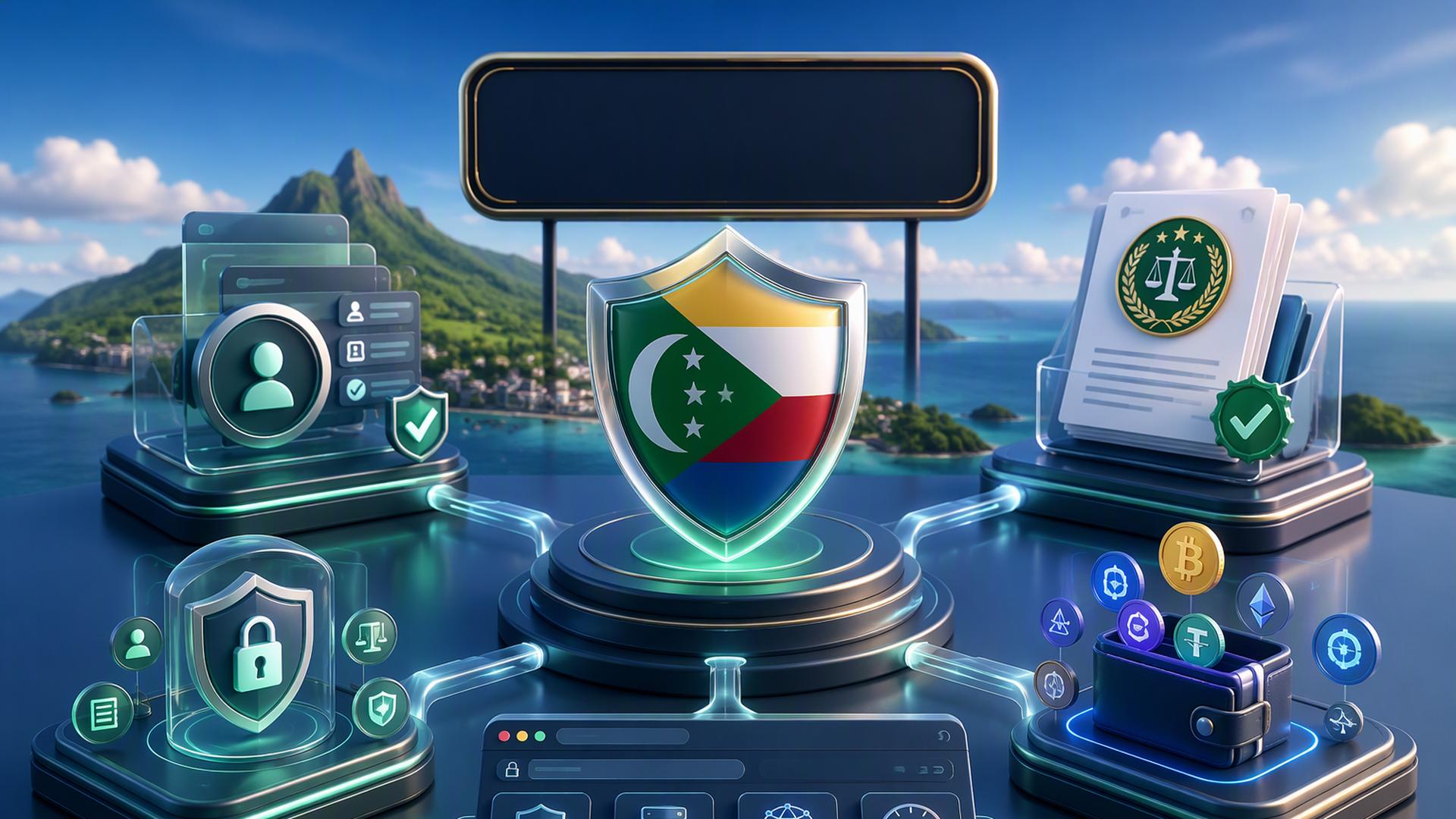
Anjouan is one of the islands of the Union of the Comoros, in the Indian Ocean. Its authorities issue offshore gaming licences, and online operators have increasingly used them in recent years. The licence is a legal permission to run online gambling services under that jurisdiction's rules, which is a different thing from a guarantee of quality.
Why Operators Choose It
Anjouan licences are generally seen as quicker and cheaper to obtain than those from heavily regulated markets. That suits crypto-focused brands that serve an international audience. The trade-off is that oversight is lighter than in places such as the UK or Malta.
Who the Operator Behind a Licence Really Is
A licence is never held by a website. It is held by a legal entity, a registered company that owns the licence and answers for the brand.
The brand name players see, such as BC.GAME, is a trading name. The company behind it is named in the footer and in the terms and conditions, usually with a registration number and a licence reference.
I could not load bc.game while preparing this article. I have therefore not named the entity or quoted licence details. Check the site's footer and terms for the exact company name and licence number. Then match them against the licensing authority's own records where those are public.
What the Licence Covers
The Core Permissions
In general, a gaming licence of this kind authorises a company to offer online casino games and sports betting to players in the markets it serves. It also sets baseline expectations for how the business is run. These are the areas an operator is usually expected to handle:
- Offering casino games, live dealer tables and sports betting under the licensed entity
- Keeping player funds and company accounts properly organised
- Applying anti-money laundering checks as the rules require
- Handling complaints and disputes through a defined process
- Publishing terms, bonus conditions and responsible gambling tools
The Role of Game Fairness
Fairness is often handled alongside the licence rather than by it. Many crypto casinos use provably fair systems, which let players check results with cryptographic proofs. This approach is separate from the licence but adds a layer of trust the paperwork cannot supply on its own.
What the Licence Does Not Cover
A licence from one jurisdiction does not make a service legal everywhere. Gambling law depends on where the player lives. Some countries restrict or ban offshore gambling, and the operator's licence does not change that.
A licence is also not an insurance policy. If a dispute arises, the route to resolution runs through the operator's complaints process and then the licensing body. That is slower and less forceful than in strictly regulated markets.
Finally, a licence says nothing about whether a bonus suits you. Wagering requirements, game weighting and withdrawal limits all sit in the terms, so those are worth reading before you deposit.
Licence Versus Real-World Protection
The table below shows where a licence helps and where the player still carries the responsibility.
Question |
The licence helps |
The player should still check |
Is the operator a real company? |
Yes, it is registered |
Name and number match the footer |
Are games fair? |
Partly |
Provably fair tools and published RTP |
Is gambling legal for me? |
No |
Local laws where I live |
Can I resolve a dispute? |
Through a set process |
Terms and complaint steps |
A Practical Way to Read Any Licence
Start at the footer. Find the company name, the licence number and the licensing authority, then look for the same details in the terms. If the names match across both, that is a good sign. If they do not, treat it as a prompt to ask questions before depositing.
Next, look at how the operator behaves day to day. Clear terms, visible responsible gambling tools and quick support replies tell you more than any badge. A licence is the starting point for trust, and the operator's habits are what keep it.
Reading the Fine Print With Confidence
The operator behind an Anjouan licence is a registered company, and that company's name and licence number are the facts worth confirming for yourself. The licence gives permission to operate and sets a basic framework, but it does not guarantee legality in your country or replace your own judgment. Check the footer, read the terms, and check your local rules. With that done, you can decide with far more confidence than most players have.